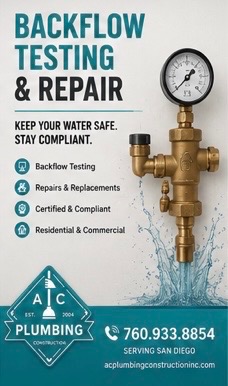
Background Information About Backflow Prevention
A backflow prevention device is a mechanical valve that stops contaminants from entering the clean water side of a plumbing system. Contamination can happen in several ways depending on how the device is installed and maintained. Pressure changes inside the plumbing system are the most common cause of backflow. For example, a broken line or leaking connection can create low water pressure downstream of the device. This pressure drop may allow contaminated water to move back into the clean water supply.
Several situations can create conditions for backflow. Common examples include broken pipes, leaks in fire suppression systems, or open hose connections attached to pressurized water lines. Each of these situations creates a potential backflow hazard.
The effects of backflow can be serious. In addition to interrupting normal activities, contaminated water can create major health risks. Depending on the contaminant, people may develop illnesses ranging from stomach discomfort to serious diseases such as cholera, E. coli, salmonella, giardiasis, and cryptosporidiosis. In severe cases, backflow can contaminate an entire community water supply.
Why Backflow Testing Is Important
Backflow testing plays an important role in maintaining commercial and residential plumbing systems. Backflow happens when contaminated water enters a clean water supply because of sudden pressure changes. This often occurs when firefighters use nearby hydrants or when utility crews shut down water mains for repairs.
Appliances such as dishwashers, irrigation systems, and washing machines are common locations where backflow issues may develop. Underground plumbing systems near sidewalks or streets may also face increased risk.
For these reasons, plumbers should perform backflow testing after plumbing installations and system modifications. Many cities also require annual inspections for backflow prevention devices. Property owners usually receive notices explaining local inspection requirements.
Regular inspections also help protect long-term water quality. Most homeowners schedule routine maintenance for vehicles and HVAC systems. Backflow prevention devices deserve the same level of attention because they help protect drinking water safety.
👉 Learn more about our plumbing inspection services:
/plumbing-inspection-services
👉 Additional drinking water safety information:
EPA Drinking Water Information
What Is Backflow Testing?
Backflow testing checks whether a backflow prevention device operates correctly or if reverse water flow may occur at a property. Certified technicians use specialized testing equipment to measure pressure differences across the backflow prevention device.
These measurements help determine whether the device protects the clean water supply properly.
Local plumbing codes regulate backflow testing procedures. Requirements may vary by city or state. AC Plumbing uses certified testers who understand local regulations and testing standards. Our technicians complete inspections carefully and accurately to help property owners remain compliant.
What Does Backflow Testing Involve?
There are two primary methods used during backflow testing.
Backpressure Testing
This method measures pressure levels upstream and downstream of the RPZ assembly. The goal is to identify signs of reverse water flow caused by pressure imbalances.
Backsiphonage Testing
This test measures suction created by pressure differences between the clean water side and the contaminated side of the system. Technicians use the results to identify possible reverse flow conditions.
Most commercial and residential properties require annual testing. However, some systems may need more frequent inspections depending on usage, local code requirements, or previous system issues.
If you suspect a problem with your backflow prevention device, do not wait for the next scheduled inspection. Prompt action helps prevent contamination and larger plumbing problems.
Common Causes of Backflow in Commercial and Residential Properties
Backflow occurs whenever contaminated water moves backward into a clean water supply. Three common types of backflow include back siphoning, back pressure, and cross-connections.
Back Siphoning
Back siphoning occurs when a vacuum forms inside the plumbing system. Broken pipes or nearby firefighting activity often create this condition. The vacuum can pull contaminated water through the system.
Back Pressure
Back pressure develops when downstream pressure becomes greater than supply pressure. Faulty pumps, clogged drains, or pressure surges can create this condition and force contaminated water backward.
Cross-Connections
Cross-connections happen when polluted water systems connect directly to potable water systems. Improper plumbing installations can create dangerous cross-connections inside commercial and residential properties.
The most common causes of backflow include:
- Sudden loss of water pressure
- Damaged backflow prevention assemblies
- Cross-connections between clean and contaminated systems
- Pipe ruptures or plumbing malfunctions
- Firefighting operations or heavy water demand
Professional Backflow Services From AC Plumbing
AC Plumbing provides professional backflow testing, repairs and replacements for commercial and residential properties throughout San Diego. Our technicians inspect systems carefully, identify potential issues quickly, and provide dependable solutions that help protect water quality.
We understand how important safe drinking water is for homeowners and businesses alike. That is why we focus on accurate testing, reliable repairs, and code-compliant installations.
👉 Explore our commercial plumbing services:
/commercial-plumbing-services
👉 Learn more about residential plumbing solutions:
/residential-plumbing-services
Routine inspections and preventive maintenance help reduce risks, protect public health, and improve plumbing system reliability. By scheduling professional backflow testing regularly, property owners can help ensure their water supply remains safe and protected year-round.